
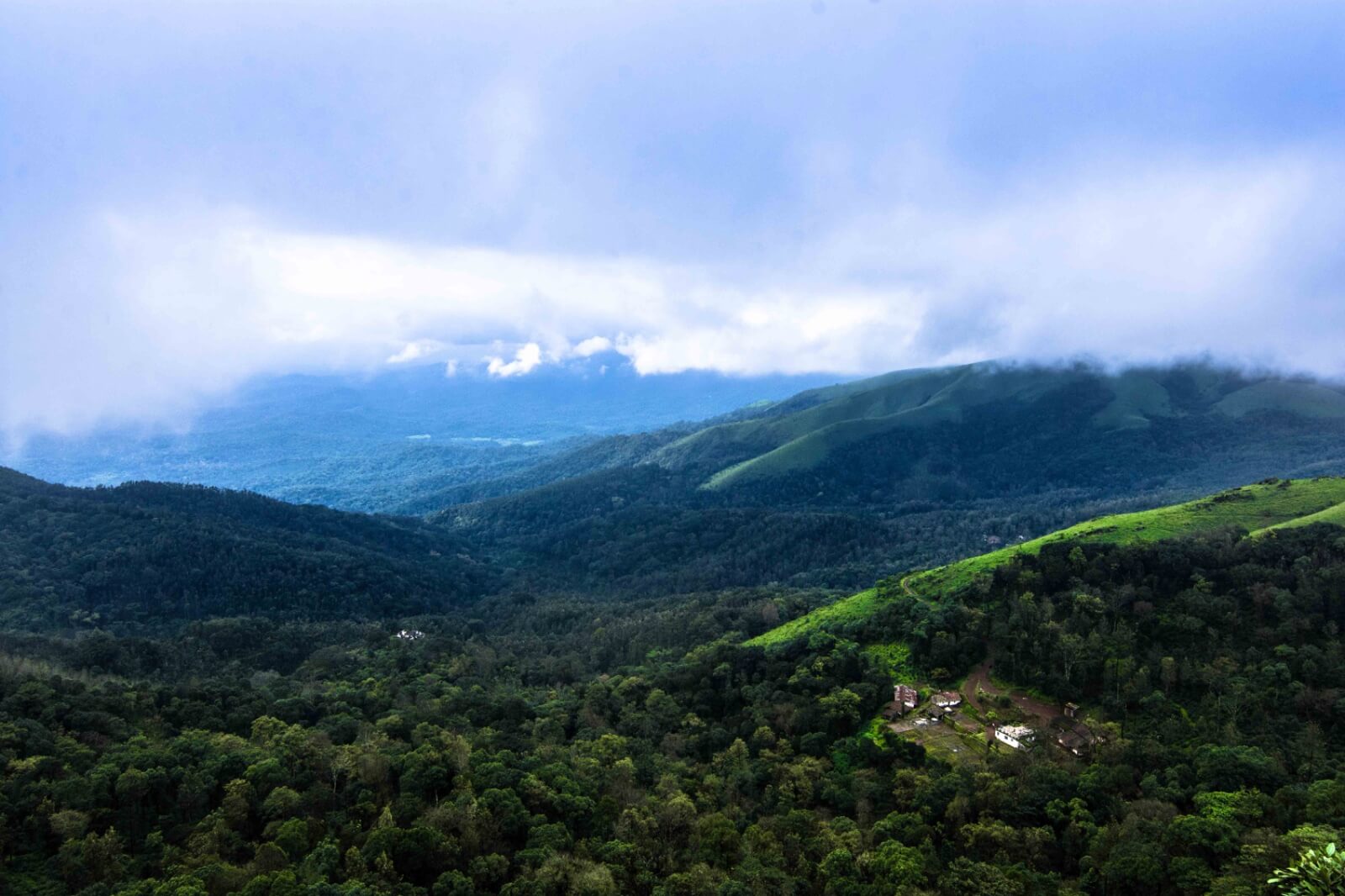
There's a moment, usually just before sunrise, when Chikmagalur gives itself away. You haven't opened the curtains yet. You're still half-asleep. But something drifts through the cool mountain air — earthy, roasted, unmistakably alive — and you suddenly understand why people travel hundreds of kilometres just to wake up here.
That smell is coffee. And in Chikmagalur, it's everywhere.
It clings to the morning mist. It comes from the hills that have been growing beans for over three hundred years. It's in the hands of the estate worker who picks cherries at dawn, and in the cup you'll hold an hour later, watching fog dissolve over the Western Ghats.
Chikmagalur is where India's love affair with coffee began. It's not a title the region claims lightly — it earned it slowly, over centuries, through generations of farmers who figured out that these particular hills, this particular altitude, this particular combination of soil and rain and shade, produced something remarkable.
If you're staying at Trivik Resorts Chikmagalur, you'll feel that history the moment you step outside.
The Story That Started It All
Every great origin story has a single, stubborn human at the centre.
For Indian coffee, that person was a Sufi saint named Baba Budan. The story goes that in the 17th century, on a pilgrimage to Mecca, he passed through Yemen — then the only place in the world where coffee was grown and traded. He was captivated by what he found. Determined to bring it home, he is said to have tucked seven coffee beans into his beard and carried them back across the sea to India.
He planted them on the slopes of what we now call Baba Budangiri, a range of hills just a short drive from where you're reading this.
It's one of those stories that's almost too good to be entirely true. But walk through the forests near those hills today and you'll find coffee plants still growing in the wild, on slopes that look virtually unchanged from how they must have appeared three centuries ago. Whether or not the legend is precisely accurate, something extraordinary happened here — and it changed the way India eats and drinks forever.
Why These Hills in Particular?
Coffee is fussy. It needs the right altitude, the right temperature, the right amount of water — and it doesn't forgive shortcuts. Most of the world's great coffee regions exist because of a very specific accident of geography, and Chikmagalur is no different.
The altitude matters enormously. Many plantations here sit between 3,000 and 5,500 feet above sea level. At that height, the air is cooler, the days are shorter, and coffee cherries mature slowly. That slow maturation is where flavour hides. Rush it and you get something thin and bitter. Let it take its time and you get something complex and rich.
The rain is generous but not relentless. The Western Ghats catch the monsoon well — enough to keep the plants thriving through the growing season, enough to keep the streams running and the air smelling of wet earth.
The soil holds memory. The region's lateritic soil is mineral-dense, built up over thousands of years of forest cover. It feeds the plants with a quiet consistency that no fertiliser fully replicates.
And then there's something you notice the moment you walk into a plantation here that you won't find on most large commercial estates anywhere in the world: the shade.
A Forest That Happens to Grow Coffee
Most of the plantations in Chikmagalur don't look like plantations in the way you might picture them — vast, sun-scorched rows of identical plants stretching to the horizon.
They look like forests.
Tall silver oaks stretch overhead. Jackfruit trees spread their branches wide. Pepper vines wind up the trunks. Cardamom clusters low to the ground. And weaving through all of it, coffee plants — shaded, sheltered, growing at the pace that nature intended.
This isn't just charming to walk through (though it absolutely is). It's a genuinely smarter way to farm. The shade keeps the soil moist and cool. The trees attract birds that control pests. The diversity of crops protects the farmer if any single harvest fails.
Walk slowly through one of these estates and it becomes obvious that generations of growers figured something out that modern industrial agriculture often tries to engineer its way around: healthy land grows better coffee.
That Moment in May When Everything Smells of Jasmine
Ask any local which week of the year is the most beautiful and don't be surprised if they don't mention a festival or a season of clear skies.
They'll probably mention the blossoming.
In the weeks after the first pre-monsoon showers — usually around May — the coffee plants bloom simultaneously. It happens fast. Overnight, the hills fill with small white flowers so dense that the estates look snow-covered from a distance. And the scent they release is extraordinary: sweet and floral, something between jasmine and orange blossom.
It lasts only a few days before the petals fall and the cherries begin to form. Locals call this the Coffee Blossom Showers.
Most tourists never see it. Which makes it one of Chikmagalur's best-kept secrets — and a genuinely compelling reason to plan a visit with the calendar in mind.
What Visiting a Plantation Actually Feels Like
There's a particular kind of pleasure in understanding something from the beginning.
Most of us have drunk coffee hundreds of times without thinking much about where it came from — which farm, which altitude, which hands harvested it, how long it dried in the sun before it reached a roaster.
Visiting a working plantation in Chikmagalur changes that permanently.
You follow a guide along narrow paths between plants that are taller than you expected. You learn to recognise a ripe cherry by its deep red colour and the slight give when you squeeze it gently. You see the processing — the pulping and drying and sorting — that strips away everything between the fruit and the bean. And then someone hands you a cup of the estate's own roast, and you drink it in a place where you can almost trace its journey backwards to the plant it came from.
It's not a complicated experience. But it sticks with you in a way that most ordinary sightseeing doesn't.
Beyond the Plantations
Coffee country is the reason most people come to Chikmagalur. But the landscape has its own arguments for keeping you here.
Mullayanagiri is Karnataka's highest peak, and a pre-dawn trek to the summit is one of those experiences that justifies the early alarm. The path is demanding enough to feel earned. The view from the top — layer after layer of hills receding into haze — is the kind of thing you find yourself describing to people for months afterwards.
Baba Budangiri earns a visit for reasons beyond its place in the coffee story. The hills are sacred to both Hindus and Muslims, and there's a quiet, unusual atmosphere to the place that's hard to name exactly. It doesn't feel like a tourist attraction. It feels like somewhere that has been important for a very long time.
Hebbe Falls and Jhari Falls are the kind of waterfalls that make you feel sheepish for ever being satisfied with a photograph of a waterfall. The forest around them is dense and cool, and the sound carries well before you see the water.
And then there are the drives. The roads through this region wind through valleys and past estates in a way that makes getting somewhere feel like a destination in itself.
On Slowing Down
There's a version of Chikmagalur that you can do in 36 hours — hit the main viewpoints, tick off the waterfall, pick up a bag of coffee at the estate shop, and leave feeling like you've seen it.
You'll have seen it. But you won't have felt it.
What Chikmagalur actually rewards is patience. Sitting with a coffee at dawn and watching the mist lift from the valley. Taking the long way back from a plantation. Spending an evening on the terrace without an agenda.
Trivik Resorts Chikmagalur is built for exactly this kind of travel. The kind where you stop optimising your itinerary and start noticing things. The views from the property stretch across the hills in a way that makes any agenda feel slightly beside the point. You'll find yourself extending your stay, often for no better reason than that one more morning here sounds like a very good idea.
When to Go
October to February is the most popular window, and for good reason. The post-monsoon skies are clear, the temperature is gentle, and the light on the hills in the early morning has a quality that photographers chase across the globe.
June to September transforms the landscape into something almost theatrical — waterfalls at full volume, valleys swallowed in cloud, the kind of green that you don't see anywhere else. If you don't mind occasional rain and genuinely love dramatic scenery, the monsoon is one of Chikmagalur's hidden strengths.
March to May is worth mentioning because the blossom season falls here, and because compared to most Indian cities at the same time of year, Chikmagalur stays relatively cool and sane.
Honestly, there's no bad time to come. The experience just changes.
From Tree to Cup
One thing that changes after you visit Chikmagalur is that you never quite drink coffee the same way again.
The process — from nurturing the plant through the slow months of growth, to harvesting, pulping, drying, roasting, grinding, brewing — takes far longer and involves far more care than the two minutes you usually give the cup in your hand.
Here, that labour is visible. You can see the drying beds. You can smell the roasting. You can meet the people who have done this work their whole lives, on land their families have worked for generations.
None of that is heavy or difficult to take in. It's actually just interesting — the way finding out how something is made almost always makes you appreciate it more.
That's the Chikmagalur effect. Visitors come for the scenery and leave with a story. They leave knowing that coffee — the thing most of us treat as a background habit — has a history as long and layered as any wine region in the world.
It just happens to be in the hills of Karnataka.
FAQs
Why is Chikmagalur called the Coffee Land of India?
It's where coffee cultivation in India began — legend places the first seeds on these hills over three hundred years ago. The region still produces some of the country's finest Arabica and Robusta beans.
Which coffee varieties are grown here?
Both Arabica and Robusta are cultivated extensively. Many estates also grow specialty micro-lots that are increasingly being sought out by roasters internationally.
Can tourists visit coffee plantations?
Yes — many estates offer guided walks, tasting sessions, and the chance to see processing up close. It's worth going with someone who knows the estate rather than a rushed group tour.
What is the Coffee Blossom Season?
The brief period — usually May — when coffee plants flower simultaneously after the first pre-monsoon showers. The estates turn white and the air fills with a jasmine-like fragrance. It lasts only a few days.
What's the best time to visit?
October to February for clear skies and comfortable temperatures. June to September for dramatic scenery and full waterfalls. May if you want to catch the blossoms.
A Final Thought
Chikmagalur doesn't announce itself. It doesn't need to.
It's a place that gets under your skin quietly — through the smell of coffee at dawn, through a sunrise you weren't quite prepared for, through the realisation at some point during a plantation walk that you've been here for an hour and haven't once looked at your phone.
That's the thing about places with deep roots. They don't perform for you. They just are. And if you give them enough time, you start to feel it.
Trivik Resorts Chikmagalur puts you right in the middle of it. Come for a weekend and see what you find.
Plan your stay at Trivik Resorts Chikmagalur — where Karnataka's coffee country becomes your morning view.